


Seeds of the Kingdom
Gospel Reading: Matthew 13:31-33, 44-52
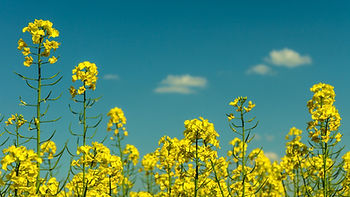
We just heard five short parables from Jesus. Scholars like to put parables into categories and try to identify each with a theme. One category is the separation parables, which the fish parable falls into, similar to the wheat and weeds parable we heard last week. These parables are interpreted as either saying that the good and the bad people will eventually be separated or that the good and the bad in each of us will eventually be separated. Another kind we encounter today are the “gem parables.” One about finding hidden treasure and one about finding the pearl of great price, both about discovering something so precious that you give up everything for it. That’s how precious the Kingdom of God is, Jesus says. And then there’s the first two parables we heard today which one scholar calls the “little seed parables”. Not that yeast is a seed, it’s actually a fungus, but it makes bread grow kind of like a seed. Point is, both the mustard seed and the yeast are both so tiny that they could go unnoticed to the untrained eye. However, as inconspicuous as they are, they are a very much noticed by their deeds—by what they do and what grows out of them. We know them by their effects. We know that they’re there because of the consequences of their presence.
So it is with the Kingdom of God, Jesus says. This Kingdom of God is not something that’s glaringly obvious to everyone. It doesn’t outshine all the other possible things that demand your attention; it doesn’t overpower all the distractions or glamorously capture the world’s attention. It may not even be obvious to those who aren’t looking for it. But the presence of the Kingdom is nonetheless very evident to those who have eyes to see it.
Now just what is this Kingdom of God supposed to be? Jesus spends more time in the Gospels trying to explain the Kingdom than anything else. It’s THE major theme of his teaching. When we consider the Gospels as a whole, one thing we can say for sure is that this Kingdom is definitely NOT like any worldly kingdom. It’s not a political empire or geographic territory ruled by a king. That much is obvious.
And when we pay attention to what Jesus is saying, it becomes clear that the Kingdom is not something that’s completely other worldly either. What Matthew calls the kingdom of heaven is usually referred to as the kingdom of God in the other Gospels, which is probably the term Jesus used historically. And while Jesus acknowledged the existence of the transcendent realm of God as either heaven or eternal life or paradise, when he spoke of the Kingdom, he seems to have meant something different. He didn’t mean heaven out there, he meant heaven manifesting here. He taught his disciples to pray: “Thy kingdom come, thy will be done on earth as it is in heaven.” So the Kingdom is earth where God’s will is done. The Kingdom, we might say, is the alignment of heaven and earth. The physical realm existing in harmony with the divine realm. And Jesus, the Word of God made flesh, was himself the perfect alignment of the physical and the divine. He manifested the Kingdom with his presence in this world. And he spent his life teaching others to live in alignment with the Kingdom and to learn to see it hidden everywhere. We are promised that one day Christ will be all in all, and this Kingdom of God will be fully known on earth for all to see, and until then it is always hidden in plain sight.
Teaching others to see the Kingdom and to be the Kingdom, to recognize its presence and to live in alignment with it, was the major thrust of Jesus’ ministry. What Jesus is saying in these parables is that even before that day of God’s kingdom come, the Kingdom is still present. Present like a little mustard seed, you may not see it buried in the ground but you see what it does: producing a shrub so large that birds perch on it like a tree. Present like yeast in dough, not noticeable in itself but obviously present to those who know how to tell it’s there.
Now it may not seem like there’s a whole lot of Kingdom sprouting going on these days. Doesn’t really seem like these seeds are bearing much fruit at all. On the national and international level there continues to be war and violence, division and corruption, poverty and injustice. On the personal level, we may feel overwhelmed by the stress in our lives or trouble in our relationships. We carry concerns about our loved ones, those suffering depression or addiction or trauma, those facing cancer or dementia or physical disability. We may grieve the loss of friends or family taken from us too soon. We may wonder where this promise of God’s presence was for them. We may doubt whether God is active in the world at large in any meaningful way or if God even cares about our personal lives at all.
And that, I think, is exactly why Jesus told these parables. What these parables proclaim is that even if we can’t detect it, the Kingdom is present. We don’t need to wait until we die to see God’s presence. We don’t need to wait until the end of the age for God’s Kingdom to be manifest in our lives. Because even though it might be as imperceivable as a seed, we can see Kingdom activity all around us. Anywhere the love of God is put into action, there the Kingdom is present. Anywhere the hungry are fed, there the Kingdom is present. Anywhere people stand up for justice, there the Kingdom is present. Anywhere someone seeks a deeper connection with the divine, there the Kingdom is present.
And the theology of the church since the earliest times, is that anywhere two or three are gathered in Christ’s name—there Christ is present, there the Kingdom is made known. The church is supposed to be the Kingdom community, a people who manifest the Kingdom with our lives. When we’re together in worship and when we go out into the world. Bringing God’s presence to a world in need, like yeast infecting the world with all the good things of the Kingdom. Things like the fruit of the Spirit: love, joy, peace, patience, kindness, generosity, faithfulness, gentleness, and self-control (Galatians 5:22-23).
These parables tell us that even when it looks like this world is completely out of alignment with God—that it’s far too sinful, far too broken—even and especially then these parables call us to remember that there are those tiny Kingdom seeds present everywhere, taking root even in this sinful, broken world. That the presence of God is here and now for those with eyes to see it, just as it will be made fully known one day. Until then we pray that God gives us vision to see the Kingdom now. We pray for the vision to perceive the fruits of the Kingdom that’s hidden everywhere in plain sight and to embody it in our lives. We pray for Christ to be our vision, like in the hymn we’re about to sing. And we trust that, by God’s grace, we may live in alignment with the Kingdom, now and forever. Amen. +
Pastor Brian Rajcok | July 26, 2026 | Ninth Sunday after Pentecost


Comments