


The Promise of Easter


Sunday's Readings: Jeremiah 15:15-21, Psalm 26:1-8, Romans 12:9-21, Matthew 16:21-28
Grace and peace to you in the name of God the Father and our Lord and Savior Jesus Christ. Amen.
My husband Ned often delights in the moments when he realizes that the various aphorisms and common sayings we use in our modern speech come from the Bible.
For example, when we moved to Connecticut from Minnesota, his family, who all live between New York City and northern New England, called him the Prodigal Son. Meaning, he returned. He knew exactly what they meant, and then I read him the story of the Prodigal Son out of the Bible he loved learning where that saying came from even if he disagreed that he spent his whole inheritance while he was away…
Another time, was during COVID when I, admittedly forced, Ned’s whole family to sit in a circle in the living room and read the Easter story on Good Friday. We came to the part where Pilate washes his hands and says, “I have washed my hands of this matter.” We paused, and Ned’s sister said, “Is that where the saying comes from?”
YES!
And today is one of those stories. The common phrase we hear is: “It’s my cross to bear.”
We use this saying when someone is enduring something difficult and there is usually some hope that if they bear their cross, there will be a payoff or a victory at the end.
You can see how our Christian theology permeates our cultural context because Jesus bears a cross, dies on it, and redeems the world’s sin through it. He rises again, conquering death—the most definite of all of life’s experiences—and through that we are promised life anew, forgiveness and redemption. That’s a very big victory to which Jesus alludes today.
But, to get to the other side of deep feelings like grief actually takes a lot of effort. Sometimes our crosses are very heavy to bear and the “keep calm and carry on” attitude can get very exhausting.
This week, I listened to a podcast put out by Rev. Kate Bowler and Rev. Nadia Bolz-Weber, two pastor-theologians who have a remarkable talent for talking theologically about our human experiences. The episode was titled, “How to Stubbornly Accept Gladness in This Ruthless Furnace of a World.” In other words, how do we bear our crosses and still find joy in our lives?
They are cross-bearing as a willingness to acknowledge the depths to which life can take us. And they focused their conversation on the work of bearing with something heavy, being with it rather than dismissing it or simply enduring it. I found their conversation fitting for this week.
Life can take us to a point where we feel like we’re hitting the basement floor, and then going below that, and then falling through a trap door to a new low.
Kate and Nadia, suggested that we honestly acknowledge the magnitude of those lows as a way to begin to bear with them rather than “keeping calm and carrying on” despite them.
We don't have to pretend it isn't as bad as it is in order to look strong.
We don't have to come up with an explanation for why it happened, or what fault we’re at in order to cope.
And we don’t have to do all that work of “bearing with” alone.
None of our crosses need to be only ours to bear. This is important because so often we say, “It’s just my cross to bear” meaning I have to do it alone. It’s common to experience pain, grief, humiliation, sadness, or any other depth to which we may fall, and feel that it’s ours to bear alone because maybe we think there’s something inherently wrong with ourself for feeling that way.
Our commercial world is definitely built around the assumption we can do it ourselves. There are products everywhere to fix you. If you are sad, there is something you can buy to make you happy. If you are lonely, there is an app to find friends. If you are tired, there is a supplement. If you don't like how you look, there is a product for that too.
The deep feelings caused by grief, loneliness, humiliation, or any kind of low don’t always indicate something that needs to be fixed. We are luck that modern psychology does have solutions to help with chronic issues and you should ask professionals about them, but at the core of those feelings, they indicate that there is something profoundly human about you.
You are experiencing a feeling. It means you’re alive!
The feeling may be terrible. It may be a cross to bear. But you are alive in the feeling. And that’s where Nadia and Kate in the podcast acknowledge there’s work to do in “bearing with” the feeling. There’s nothing wrong. There’s something to learn.
In our story today, Peter wasn't a shining example of this.
Jesus tells his disciples that he must suffer on the cross, be killed, and rise again. Peter couldn’t bear to hear it. He pulls Jesus aside and says, “No! That’s not right!” Peter wants a better solution. He wants to avoid the pain.
I understand Peter and I think most of us do.
When someone we love is hurting, we want to fix it. We want to make the pain go away.
But sometimes there is no quick solution. We must acknowledge the magnitude of the low and bear with it. Bear with them in it. We excavate the depths together and in that work we dig up more space where Joy floods in and takes deeper root in the space where grief carved a hole.
That’s a paradox. To feel the richness of joy, for joy to take deep root within us, we have to know the depths of sadness, too. Joy and sadness somehow need each other.
As much as joy needs sadness, I don't think Jesus is telling us to go looking for suffering when he tells us to bear our cross. And I certainly don't think Christianity teaches that if we are suffering enough, we are more faithful people.
Rather, Jesus invites us to follow him into the truth of human life. Into the paradoxes of life.
There will be things we cannot fix. There will be grief we cannot explain. There will be moments we hit the basement floor. And when those moments come, we don’t have to pretend. We can acknowledge the reality of the cross which we bear. And we can do it together in community.
The cross is real.
The suffering is real.
The grief is real.
But the cross is not the end of the story.
Easter is.
Perhaps what it means to take up our cross is to invite Christ into our low places, to acknowledge that Christ is there with us in the lows. Because the One who meets us at the cross is also the One who meets us at the empty tomb.
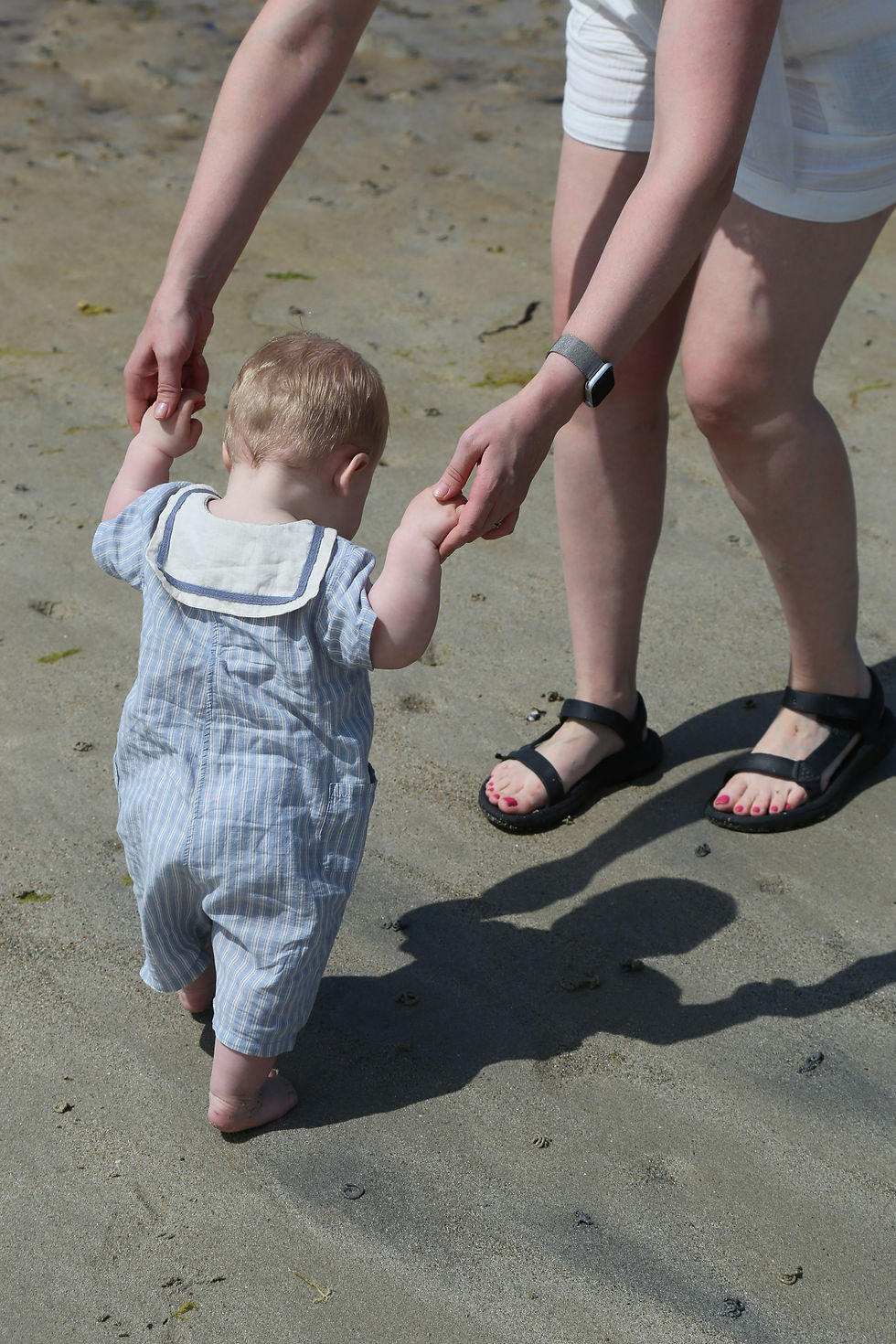
This promise gives us hope in our “bearing with” work. We sit with one another in the depths holding one another’s hands saying, “I don't know how this is going to turn out, but you don't have to go through it alone.” I am with you, and I know Christ is with you too.
And… Easter begins to dawn. Joy begins to take root.
Christ is risen.
The deepest place, the heaviest cross to bear is never the final place.
There is always the promise of Easter morning.
Thanks be to God. Amen.
Rev. Ryan | August 30, 2026 | 14th Sunday after Pentecost


Comments